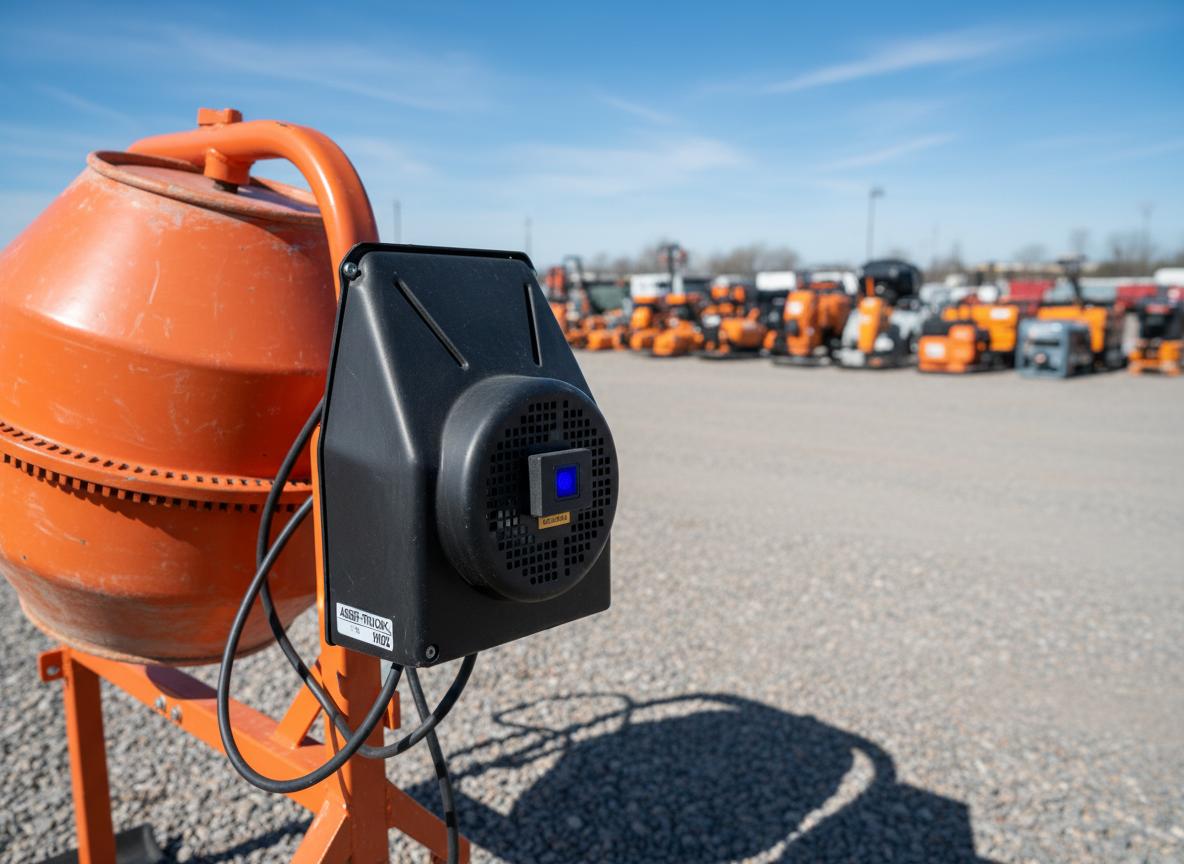
5–15% Ghost Fleet
ARA benchmarks target 72% on-rent / 20% yard-ready / 8% non-rental-ready (Rental Equipment Register). In practice, 5–15% lands in a status-unknown bucket between physical counts.
Industry
5–15% of a typical rental fleet is unaccounted for at any moment. TagLogger gives branch managers and ops a real number to work from — yard in/out, overdue moves, return disputes — without per-asset cellular fees.
Rental inventory constantly moves between customers, yards, and branches. Between physical counts, 5–15% of the fleet may be unaccounted for — not on rent, not in the yard, status unknown. Traditional GPS costs $15–30 per asset per month.
ARA benchmarks target 72% on-rent / 20% yard-ready / 8% non-rental-ready (Rental Equipment Register). In practice, 5–15% lands in a status-unknown bucket between physical counts.
A significant share of rental contracts go past their return date. Without location data, recovery teams start from zero with phone calls.
Traditional GPS tracking runs $15–30 per asset per month in cellular fees alone. For a 200-unit fleet, that's $36,000–$72,000 a year.
Average time utilization sits around 60–70%. Every idle day at the wrong branch is lost revenue that visibility could prevent.
Sources: ARA equipment rental industry forecast, RER: ARA Rental Market Metrics whitepaper.
Track, replay, and geofence your fleet on a real map, then export proof and alert your team where they already work.
See live placement of tags across your operating region with a current-location list for quick visibility.
The moment a tag crosses a zone boundary, TagLogger fires an entry or exit alert. And when an asset is away from a zone longer than expected, TagLogger reminds you. Alerts reach your phone and the tools your team already runs on.
Entries, exits, and assets away longer than expected, delivered in real time across every channel
Adjust boundaries to fit your operation, from tight on-site zones to broad regional coverage.
Set zone radius to fit any site or region
Powered by 2 billion+ Apple devices with no hidden cellular fees.
Global coverage through the Find My network
Track the latest entry/exit and movement events in one feed for faster response.
Auto-populated feed with no setup required
Create secure share links with optional expiry and revoke controls for location sharing.
External access without account login
Export CSV or JSON records for proof of delivery, audits, insurance claims, and reporting workflows.
Exports include route points and timestamps
Generate a branded one-page proof-of-location report or a full activity report as PDF, with honest accuracy and travel estimates surfaced as reported.
One-click branded PDF with a document fingerprint
Switch route history to a density heatmap to instantly see where a tag spends the most time.
Surface dwell hotspots at a glance
Access crisp, high-resolution satellite views for sharper detail and better visibility in the field.
High-resolution satellite basemap on demand
Give teammates view or change access for all tags or selected tags.
Role-based access with per-tag visibility
Build custom integrations with REST endpoints, signed webhooks, and drop-in Python and TypeScript SDKs, backed by a published OpenAPI 3.1 spec.
Scoped, revocable API keys
View API documentationConnect ChatGPT, Claude or another AI app to your workspace and ask where the generator is, or when the trailer left the yard. Answers come from your own tag data.
Open MCP standard. Each app needs your approval
See how to connectPublish white-label pages under your brand that give each customer a live view of their tags, zones, and recent zone activity.
One secure link per customer, revocable anytime
Create geofence zones in bulk from a CSV file, with a preview before anything is created.
Bulk zone setup from one spreadsheet
Everything above comes standard.
One plan with every feature included. No tiers to compare, nothing to unlock later.
Rental inventory constantly moves between customers, yards, and branches. Manual yard audits consume hours of labor and the data goes stale within days. Between counts, equipment can be overdue, misplaced, or sitting idle at the wrong branch - and nobody knows until someone checks.
TagLogger replaces point-in-time physical counts with continuous visibility. Branch managers and dispatch teams can see where assets were last active, so recovery and rebalancing decisions happen faster and with better data.
How TagLogger Helps
33–67%
Less Than GPS Cost
Tags from $15 one-time plus $10 per tag per month for service, vs. $15–30/month per device for GPS. Practical to track assets that never justified GPS.
5–15%
Fleet Visibility Gap Closed
Continuous location data eliminates the ghost fleet — know what's in the yard, what's out, and what's overdue without physical counts.
Evidence
For Every Dispute
Movement history turns he-said-she-said into documented fact during rental closeout and damage claims.
Begin with the asset categories that drive the most shrink and margin risk - typically generators, compactors, light towers, and trailers. Set geofences for yards and depots, assign alert ownership, and build return-monitoring workflows.
As the process proves out, expand to additional inventory classes and branches using the same naming and alert standards.
Average time utilization across general rental fleets sits around 60-70%. Every idle day at the wrong location is lost revenue. When branch and ops teams share real-time movement context, they can reposition equipment before utilization drops.
Last-seen data also reduces the labor spent chasing overdue returns - recovery teams have a starting point instead of starting from zero.
Every rental yard runs a ghost fleet — equipment that's on the books but isn't on rent and isn't in any branch's physical count. Industry data suggests 5–15% of a typical rental fleet sits in this state at any given moment. The pieces that drift longest are the highest-margin: small-to-mid generators, light towers, compactors, scissor lifts. The branch manager doesn't notice they're missing because the contract status is closed; the rental coordinator doesn't notice because the asset isn't on a current ticket; and the corporate utilization report sees the unit as 'available' even though no branch has eyes on it.
The compounding cost is straightforward but rarely calculated honestly. A 200-unit branch with 7% ghost fleet has 14 missing units. At a $300/day average rate and 50% time utilization, the lost revenue per missing unit is $54,750/year — call it $50K to keep the math conservative. Across 14 units, that's $700,000 in annual revenue the branch can't book because it can't locate the inventory. This is before any actual replacement spend on units that ultimately get written off.
| Ghost-fleet rate | Missing units (200-unit branch) | Annual lost revenue (conservative) |
|---|---|---|
| 3% | 6 | $300,000 |
| 7% | 14 | $700,000 |
| 10% | 20 | $1,000,000 |
| 15% | 30 | $1,500,000 |
Tracking doesn't recover ghost fleet on its own — recovering it still takes branch effort, contract reviews, and sometimes legal action. What tracking does is convert 'missing' into 'located but not rented' or 'located but at the wrong customer site.' That pivot turns a write-off into a recovery action with a starting point. Most rental ops that deploy continuous tracking report ghost-fleet rates falling 30–50% within the first two quarters.
Traditional GPS tracking costs $15-30/asset/month in cellular fees alone. TagLogger uses AirTags with no per-device cellular fees - making it practical to track assets that never justified GPS.
Replace monthly physical counts with always-on location data. Know what's in the yard, what's out, and what's overdue - without pulling staff for manual audits.
Movement history shows where equipment was throughout the rental window, turning he-said-she-said into documented fact during closeout and claims.
Three tags, one platform. Every tag ships pre-configured and reports into the same dashboard, so you only choose the size and battery life that fits where it will live. If you already own compatible Find My tags, we can onboard those instead.
Slim coin-cell tag for tools, cases and equipment where size matters most.
Sealed multi-year tag for vehicles, trailers and equipment that lives outdoors.
Twin lithium cells for the longest deployments with the fewest site visits.
All three shown at the same scale.
Use live visibility and history to cut shrink and increase return confidence.