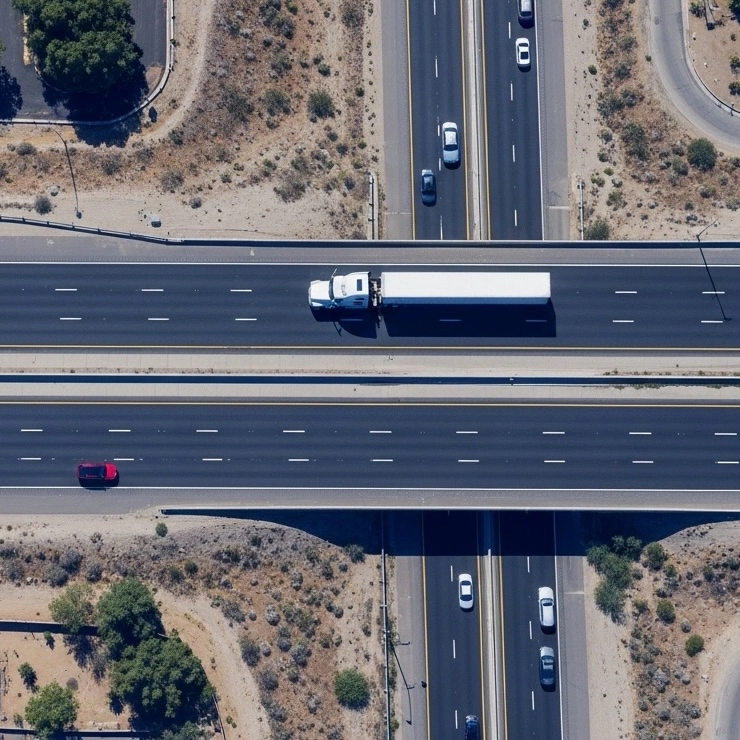
The logistics industry loses billions yearly in unreturned pallets and returnable transport items (RTIs). TagLogger gives chain-of-custody visibility across depots — without RFID infrastructure.
Returnable transport items cycle between facilities, customers, and return points. Without tracking, RTIs accumulate at customer sites, disappear during cross-dock transfers, and quarterly cycle counts pull workers off operations for days.
1
10–15% Annual RTI Shrinkage
Industry estimates put returnable transport item loss at 10–15% annually ([Supply Chain Brain](https://www.supplychainbrain.com/articles/43809-mastering-returnable-transport-items-rtis-in-peak-seasons)). Cages, pallets, and totes disappear between facilities without accountability.
2
Cross-Dock Handoff Failures
Assets get lost during cross-dock transfers and facility handoffs. Without proof of location, disputes become finger-pointing between sites.
3
RFID Gate Reader Limitations
RFID requires $50K+ per facility in reader infrastructure and only tracks gate pass events — not where assets are between scan points.
4
Quarterly Cycle Count Burden
Physical RTI counts pull workers off operations for days. Data goes stale immediately, and float imbalances go undetected between audits.
Track, replay, and geofence your fleet on a real map, then export proof and alert your team where they already work.
See live placement of tags across your operating region with a current-location list for quick visibility.
Real-time alerting
Geofence Alerts
The moment a tag crosses a zone boundary, TagLogger fires an entry or exit alert. And when an asset is away from a zone longer than expected, TagLogger reminds you. Alerts reach your phone and the tools your team already runs on.
Entries, exits, and assets away longer than expected, delivered in real time across every channel
Push
Email
Slack
Teams
Discord
Telegram
Custom Geofence Zones
Adjust boundaries to fit your operation, from tight on-site zones to broad regional coverage.
Set zone radius to fit any site or region
Worldwide Coverage
Powered by 2 billion+ Apple devices with no hidden cellular fees.
Global coverage through the Find My network
Activity Feed
Track the latest entry/exit and movement events in one feed for faster response.
Auto-populated feed with no setup required
Secure Share Links
Create secure share links with optional expiry and revoke controls for location sharing.
External access without account login
Location History Export
Export CSV or JSON records for proof of delivery, audits, insurance claims, and reporting workflows.
Exports include route points and timestamps
Proof-of-Location Reports
Generate a branded one-page proof-of-location report or a full activity report as PDF, with honest accuracy and travel estimates surfaced as reported.
One-click branded PDF with a document fingerprint
Movement Heatmap
Switch route history to a density heatmap to instantly see where a tag spends the most time.
Surface dwell hotspots at a glance
HR
High-Resolution Maps
Access crisp, high-resolution satellite views for sharper detail and better visibility in the field.
High-resolution satellite basemap on demand
Admin
Editor
Viewer
Team Access Controls
Give teammates view or change access for all tags or selected tags.
Role-based access with per-tag visibility
200 OK
POST/v1/webhooks
{"event":
"tag.moved" }
Developer API
Build custom integrations with REST endpoints, signed webhooks, and drop-in Python and TypeScript SDKs, backed by a published OpenAPI 3.1 spec.
Publish white-label pages under your brand that give each customer a live view of their tags, zones, and recent zone activity.
One secure link per customer, revocable anytime
Geofence CSV Import
Create geofence zones in bulk from a CSV file, with a preview before anything is created.
Bulk zone setup from one spreadsheet
✓
Everything above comes standard.
One plan with every feature included. No tiers to compare, nothing to unlock later.
The RTI visibility gap
Pallets, totes, cages, and dollies cycle between facilities, customers, and return points. Without tracking, returnable transport items accumulate at customer sites, disappear during cross-dock transfers, or sit in yards with no accountability trail. Quarterly physical counts pull workers off operations for days and the data goes stale immediately.
TagLogger gives warehouse, dispatch, and central operations teams continuous location context so RTI float imbalances and handoff gaps surface before they become write-offs.
How TagLogger Helps
Logistics workflows TagLogger supports
Track RTIs (cages, totes, pallets, dollies) across facilities and customer sites.
Set geofences around cross-dock zones, yards, and handoff points.
Use movement history to resolve proof-of-location disputes between facilities.
Replace quarterly physical counts with continuous RTI float visibility.
Give warehouse, dispatch, and central ops teams the same asset view.
Deploy without RFID infrastructure — every iPhone is a reader.
Why logistics teams choose TagLogger
10–15%
Annual RTI Shrinkage Addressed
Continuous visibility helps recover returnable transport items before they disappear from the float entirely.
No Gates
No RFID Infrastructure
Unlike RFID that costs $50K+ per facility in reader infrastructure, TagLogger tracks assets between facilities with no install.
Proof
Chain-of-Custody Evidence
Timestamped movement history resolves 'we sent it, they never got it' disputes with data instead of phone chains.
Where logistics teams start
Begin with the asset categories that cause the highest downstream disruption when missing - typically high-value RTIs, pallet jacks, and shared dock equipment. Set geofences for key transfer points and assign alert ownership.
Once the workflow is proven in one hub or corridor, scale to more facilities and asset types using the same naming and alert standards.
Operational result
Movement timelines replace manual reconstruction during loss investigations and chain-of-custody reviews. Warehouse workers spend less time searching for shared equipment at shift start. Dwell-time patterns surface so operations can address bottlenecks before they cause detention charges.
For non-powered assets that move unpredictably between facilities, TagLogger delivers the accountability layer that barcode scanning misses and GPS tracking can't justify at scale.
Returnable transport item (RTI) shrinkage: closing the float
Returnable transport items — pallets, totes, cages, dunnage racks, IBCs — sit in a category most operations don't measure tightly. Published estimates put annual RTI losses at 10–15% of the pool. At a plastic pallet pool of 50,000 units valued at $35 each, even the low end of that range is $175,000/year quietly leaving the float. The pool gets refreshed with new units, the cost goes into general overhead, and the actual shrinkage rate stays unknown because nobody has location data on individual units.
Tracking RTIs is a different problem from tracking finished goods. Finished goods get a barcode scan at every dock door and the location is implicit in the scan event. RTIs leave the dock, go to a customer, sit somewhere, and theoretically come back. The 'sit somewhere' phase is where the float collapses — at customer sites that have stopped returning them, at third-party warehouses that took possession during transfer, at recycling routes that picked them up by mistake. Without per-unit location, the operations team is reconstructing this from incomplete records months after the fact.
Tag a representative sample of the RTI pool first (10–20% across categories) to baseline the actual shrinkage rate against the assumed rate — most operations find the real number is materially different
Set geofences around customer sites with the highest historical no-return rates; track dwell time per RTI category to surface accumulation before it becomes write-off
Use the timestamped movement history during loss investigations and chain-of-custody disputes — particularly when RTIs cross between sister facilities or contracted carriers
Cross-reference dwell-time data with customer-billing cycles to identify which customers are quietly accumulating RTIs vs those returning on schedule
The output of an RTI tracking program is typically two numbers: the actual annual shrinkage rate (almost always different from the assumed rate) and the named accumulation points. From there, the operations team can prioritize recovery routes, billing changes, or contract amendments. The tracking layer doesn't fix RTI shrinkage by itself — but you can't fix what you can't see, and most pool managers are operating without the visibility today.
Frequently asked questions
Performance Signals
Fills the gap between barcode scans
Barcode and RFID only track assets at fixed scan points. TagLogger fills the visibility gap for assets in transit, in yards, or at customer sites between scans.
Practical for non-powered assets at scale
GPS tracking runs $15-30/month per device and needs recurring charging. For pallets, cages, and dollies, TagLogger gives the same accountability on a one-time Compact Tag and a single CR2032 that lasts up to a year, plus $10 per tag per month for service. No cellular contract, no charging rotation.
Proof of location for disputes
Timestamped movement history resolves 'we sent it, they say they never got it' disputes with evidence instead of finger-pointing between facilities.
Execution Playbook
Start with high-shrinkage RTI categories and shared dock equipment.
Set geofences for cross-dock zones, yards, and key handoff points.
Review RTI float balances and dwell-time patterns during weekly ops planning.
Tag Hardware
Three tags, one platform. Every tag ships pre-configured and reports into the same dashboard, so you only choose the size and battery life that fits where it will live. If you already own compatible Find My tags, we can onboard those instead.
Ships pre-configuredReplaceable batteriesNo charging, no SIMNo base station
Compact Tag
Slim coin-cell tag for tools, cases and equipment where size matters most.
Size
Ø26 mm × 7.1 mm (1.02 × 0.28 in)
Weight
5.4 g (0.19 oz)
Battery
CR2032 coin cell
Battery life
Up to 1 year
Replaceable
Yes
Protection
Not IP rated, keep dry
Mounting
Adhesive pad
Standard Tag
Sealed multi-year tag for vehicles, trailers and equipment that lives outdoors.
Size
Ø48 mm × 17 mm (1.89 × 0.67 in)
Weight
26 g (0.92 oz)
Battery
CR2477 coin cell
Battery life
Up to 3 years
Replaceable
Yes
Protection
IP68 sealed
Mounting
Adhesive pad or screw mount
Extended Tag
Twin lithium cells for the longest deployments with the fewest site visits.
Size
Ø54 mm × 25 mm (2.13 × 0.98 in)
Weight
47 g (1.66 oz)
Battery
2 × ER14250 lithium
Battery life
Up to 6 years
Replaceable
Yes
Protection
IP68 sealed
Mounting
Adhesive pad or screw mount
All three shown at the same scale.
Improve logistics asset visibility
Build stronger handoff control with location history and shared operations access.