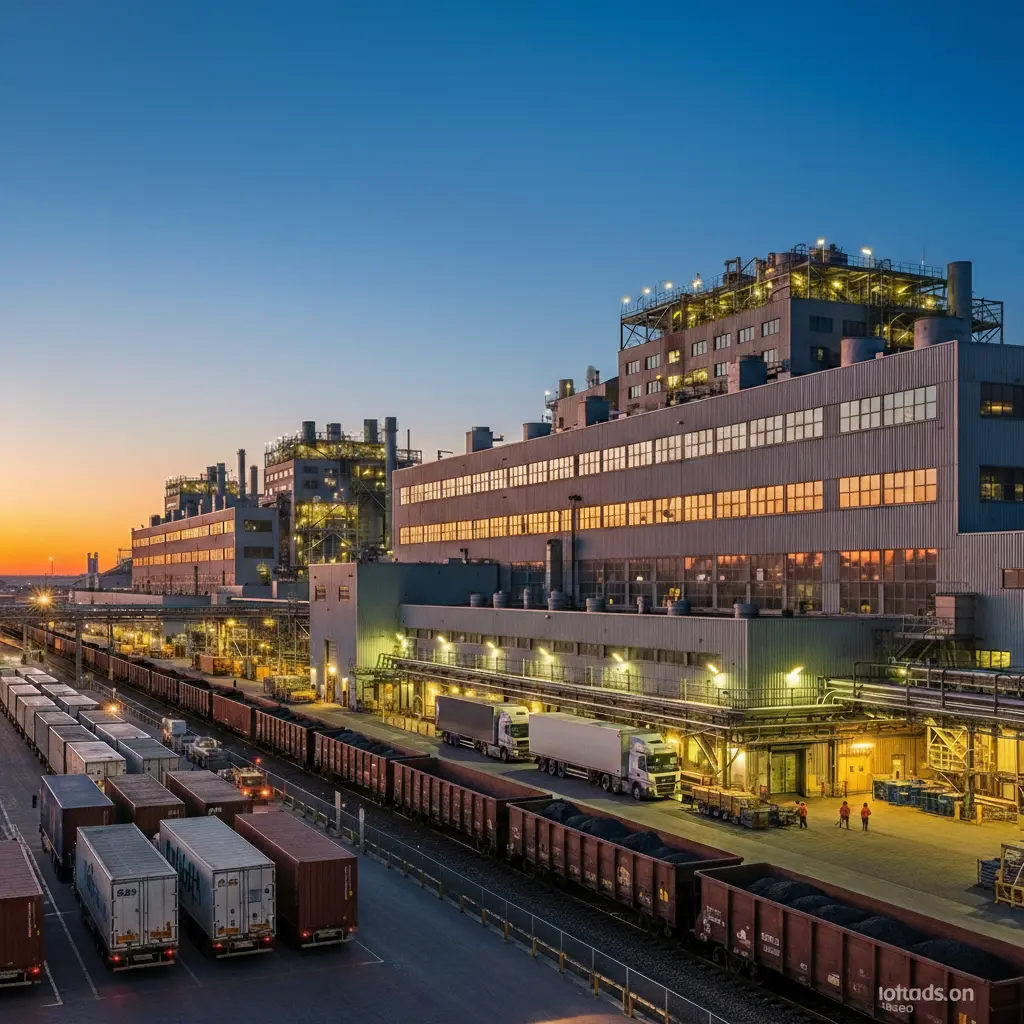
20–30 Min/Shift Lost to Searching
Production workers spend 20–30 minutes per shift hunting for shared tools, fixtures, and test equipment across the floor.
Industry
Production crews lose 20–30 minutes a shift hunting shared tools, fixtures, and gauges. TagLogger gives plant ops one shop-floor view across cells, lines, and shifts — without an RFID buildout.
Shared fixtures, gauges, and test equipment move between cells, lines, and storage areas throughout the day. When a tool is missing for a changeover, the line stops. RFID tool cribs only track check-in and check-out — not where equipment actually is.
Production workers spend 20–30 minutes per shift hunting for shared tools, fixtures, and test equipment across the floor.
Gauges and instruments due for scheduled calibration cannot be located. Floor-by-floor searches delay PM schedules and create ISO/IATF 16949 audit findings.
RFID requires $50K–$200K+ per facility in reader infrastructure and only tracks check-in/check-out. When tools don't return to the crib, visibility ends.
Every minute of unplanned downtime costs thousands. The 'waiting for tools' component of OEE loss is avoidable with faster location.
Sources: OEE.com: world-class OEE benchmarks, Siemens: True Cost of Downtime analysis.
Track, replay, and geofence your fleet on a real map, then export proof and alert your team where they already work.
See live placement of tags across your operating region with a current-location list for quick visibility.
The moment a tag crosses a zone boundary, TagLogger fires an entry or exit alert. And when an asset is away from a zone longer than expected, TagLogger reminds you. Alerts reach your phone and the tools your team already runs on.
Entries, exits, and assets away longer than expected, delivered in real time across every channel
Adjust boundaries to fit your operation, from tight on-site zones to broad regional coverage.
Set zone radius to fit any site or region
Powered by 2 billion+ Apple devices with no hidden cellular fees.
Global coverage through the Find My network
Track the latest entry/exit and movement events in one feed for faster response.
Auto-populated feed with no setup required
Create secure share links with optional expiry and revoke controls for location sharing.
External access without account login
Export CSV or JSON records for proof of delivery, audits, insurance claims, and reporting workflows.
Exports include route points and timestamps
Generate a branded one-page proof-of-location report or a full activity report as PDF, with honest accuracy and travel estimates surfaced as reported.
One-click branded PDF with a document fingerprint
Switch route history to a density heatmap to instantly see where a tag spends the most time.
Surface dwell hotspots at a glance
Access crisp, high-resolution satellite views for sharper detail and better visibility in the field.
High-resolution satellite basemap on demand
Give teammates view or change access for all tags or selected tags.
Role-based access with per-tag visibility
Build custom integrations with REST endpoints, signed webhooks, and drop-in Python and TypeScript SDKs, backed by a published OpenAPI 3.1 spec.
Scoped, revocable API keys
View API documentationPublish white-label pages under your brand that give each customer a live view of their tags, zones, and recent zone activity.
One secure link per customer, revocable anytime
Create geofence zones in bulk from a CSV file, with a preview before anything is created.
Bulk zone setup from one spreadsheet
Everything above comes standard.
One plan with every feature included. No tiers to compare, nothing to unlock later.
Shared fixtures, gauges, and test equipment move between cells, lines, and storage areas throughout the day. When a die is missing for a changeover or a torque wrench isn't where it should be, the line stops. Industry studies suggest 10-15% of portable equipment is unaccounted for at any given time in a typical plant.
The problem compounds across shifts: the outgoing crew leaves a tool somewhere, the incoming crew can't find it, and a supervisor spends the first 30 minutes of the shift tracking it down instead of running production.
How TagLogger Helps
20–30 min
Per-Shift Search Time Eliminated
Production workers recover 20–30 minutes per shift when shared tools are visible instead of missing.
No RFID
Zero Infrastructure Required
Unlike RFID tool cribs that cost $50K–$200K+ per facility, TagLogger uses AirTags and existing iPhones on the floor.
ISO Ready
Calibration Traceability
Locate every tracked instrument for PM scheduling. Support ISO 9001 and IATF 16949 traceability without manual search.
RFID tool tracking requires reader infrastructure at every choke point - $50K-$200K+ per facility - and only tracks check-in and check-out, not where equipment actually is on the floor. When tools don't get returned to the crib, RFID loses visibility entirely.
TagLogger tracks mobile assets wherever they go on the floor, between lines, and across facilities - with no infrastructure install. Every iPhone in the plant is a reader.
Start with the equipment classes that cause the most changeover delays and search time: calibration instruments, shared fixtures, and high-value portable test equipment. Use naming conventions aligned to line, zone, and function. Set geofences for controlled storage areas and tool cribs.
Expand by line, area, or facility as the workflow proves out. Integrate exception reviews into daily production meetings and Gemba walks.
Quality auditors don't ask for tracking software. They ask whether you can produce the calibration history of a specific torque wrench, gauge, or fixture on demand — and whether the device was used within its calibration window on the parts you shipped that day. Most plants assemble that answer through a calibration sticker on the tool, a CMMS record of the last calibration date, and a paper or spreadsheet log of who checked the tool out when. The weak link is the location of the tool right now: if a gauge is overdue and the auditor asks where it is, the answer is rarely faster than a floor walk.
TagLogger fills that gap. Calibration-tracked assets each carry a tag tied to the asset ID in your CMMS or quality system. The location is current to the last few minutes. When a gauge is approaching its calibration deadline, you can pull it before it goes overdue — instead of after, when production has already used it on parts that may need to be re-inspected.
This isn't a replacement for a calibration management system — it's the location layer underneath one. The QMS still owns the calibration schedule, certificate-of-calibration documents, and tolerance records. TagLogger answers the location-evidence question that the QMS doesn't have a primitive for.
Reducing the 'waiting for tools' component of OEE loss means more productive minutes per shift - without adding headcount or buying duplicate equipment.
Unlike RFID systems that cost $50K-$200K+ per facility in reader infrastructure, TagLogger works with AirTags and the existing iPhones on your floor.
Know where every tracked instrument is so calibration schedules stay on track and audit findings don't pile up from missing devices.
Three tags, one platform. Every tag ships pre-configured and reports into the same dashboard, so you only choose the size and battery life that fits where it will live. If you already own compatible Find My tags, we can onboard those instead.
Slim coin-cell tag for tools, cases and equipment where size matters most.
Sealed multi-year tag for vehicles, trailers and equipment that lives outdoors.
Twin lithium cells for the longest deployments with the fewest site visits.
All three shown at the same scale.
Track calibration instruments, shared fixtures, and mobile equipment across the floor - without RFID infrastructure.